
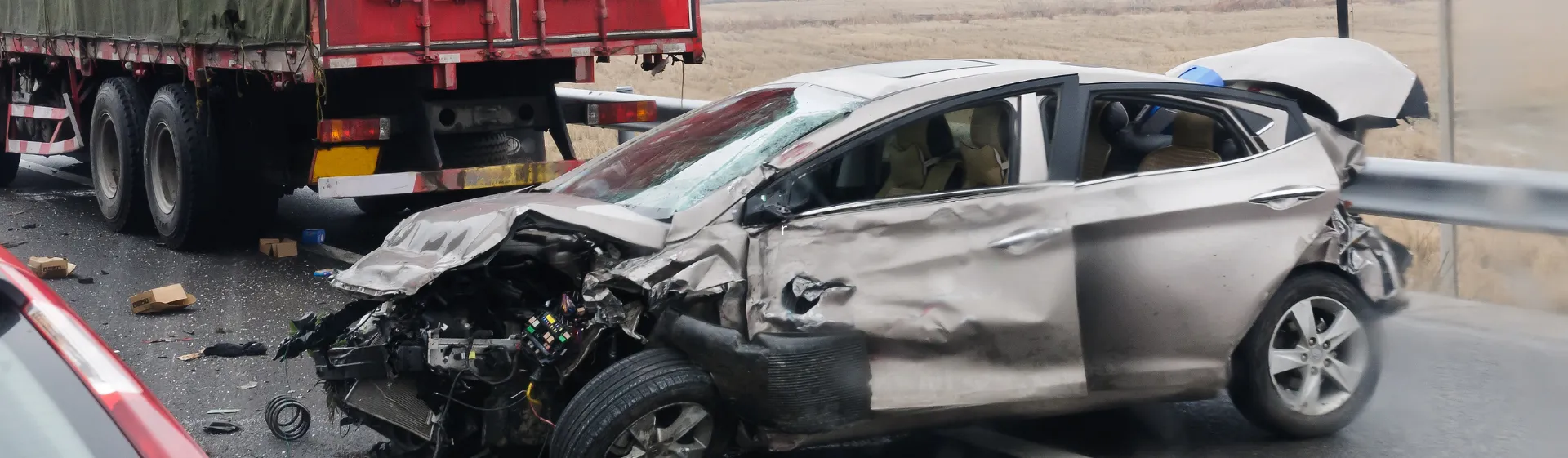
Atlantic County Truck Accident Lawyers
Key Takeaways
- Truck drivers are under significant pressure, which raises their risk of causing an accident.
- Truck crashes often involve multiple liable parties, including drivers, carriers, and cargo loaders.
- New Jersey gives injured victims two years to file a personal injury lawsuit.
- If you are successful in a truck accident case, you may be entitled to significant financial compensation.
Truck accidents in Atlantic County often cause more severe injuries than typical car accidents because of the size and weight difference between commercial vehicles and passenger cars. Victims face complicated insurance policies, multiple potentially liable parties, and federal regulations that do not apply to ordinary traffic cases. Local roadways, including the Atlantic City Expressway and the White Horse Pike, see heavy commercial traffic year-round, which increases the risk of a serious collision.
What Causes Truck Accidents in Atlantic County?
Truck accidents in the region tend to stem from a recurring set of factors, and identifying the cause is often the first step a tractor-trailer accident attorney in New Jersey takes when building a case:
- Driver fatigue, especially on long-haul routes along the Atlantic City Expressway and the Garden State Parkway, where drivers push past legal driving limits to meet delivery schedules
- Hours-of-service violations, which restrict how long a commercial driver may operate before resting under rules published by the Federal Motor Carrier Safety Administration
- Distracted driving and speeding to meet delivery deadlines, both common in commercial trucking
- Poor vehicle maintenance, including worn brakes, tire blowouts, and faulty trailer hitches that carriers fail to inspect on schedule
- Jackknife accidents, which often occur when a driver brakes too hard or loses control on wet pavement, prompting a jackknife accident lawyer to examine braking history and weather conditions
- Improperly secured or overloaded cargo, which can shift during transport and is a focus of any 18-wheeler accident lawyer’s investigation into loading practices
- Inexperienced drivers who lack proper training for the size and handling of a commercial rig
Who Is Responsible for a Truck Accident?
Trucking companies can be held responsible for the careless actions of their driver, or for their own independent actions, such as failing to maintain their fleet or negligent hiring and retention. Your case could also involve a cargo loading company if improperly secured freight caused the truck to become unstable, or a parts manufacturer if a defective component, such as brakes or tires, contributed to the crash.
Delivery truck accident cases in New Jersey often involve additional considerations, since local delivery companies may lease vehicles or contract with independent drivers, which affects who bears legal responsibility for a crash. Government entities can also share liability when poor road design, missing signage, or delayed maintenance contributed to the collision. Identifying every liable party matters because commercial trucking claims frequently involve larger insurance policies than standard auto claims, and multiple defendants may share fault in proportions that affect the total recovery available to an injured victim.
How to Win a Truck Accident Case
Building a strong truck accident case starts with preserving evidence quickly, since electronic logging device data, dashcam footage, and maintenance records can be overwritten or discarded within days or weeks of a crash. An attorney will typically send a spoliation letter to the trucking company early, formally requiring the preservation of black box data, driver logs, and inspection reports before they are lost or routinely deleted.
Establishing fault often requires reconstructing the crash using police reports, witness statements, and physical evidence from the scene, along with expert analysis of skid marks, vehicle damage, and roadway conditions. Comparing the driver’s logged hours against the timeline of the crash can reveal fatigue violations, while inspection records can expose maintenance failures the carrier ignored.
A thorough investigation into the trucking company’s safety history, including past violations reported to federal regulators, can also strengthen a claim by showing a pattern of disregard for safety rules. Medical records connecting the victim’s injuries directly to the crash are equally important, since insurers often try to argue that some injuries existed beforehand. Working with an attorney who understands how carriers and their insurers respond to these claims often makes the difference between a lowball offer and a settlement that reflects the true cost of the accident.
How the Truck Accident Legal Process Unfolds
After a crash, the legal process typically begins with an investigation phase, during which an attorney gathers evidence, identifies liable parties, and calculates the full scope of damages. This is followed by a demand to the insurance carriers involved, outlining the evidence of fault and the compensation sought for the victim’s injuries and losses. Insurers representing large trucking companies often respond slowly or dispute liability, so this stage can take several weeks or months depending on the complexity of the claim.
If a fair settlement cannot be reached, the case moves into litigation, which includes formal discovery, depositions of the driver and company representatives, and potentially expert witness testimony on trucking safety standards. Many truck accident cases settle before trial once both sides have reviewed the evidence, although some proceed to a jury verdict when liability or damages remain disputed. Throughout this process, an attorney handles communication with insurers and opposing counsel so that the victim can focus on recovery rather than paperwork and negotiations.
Damages in a Truck Accident Case
Victims of a truck accident may be entitled to recover several categories of damages, depending on the severity of their injuries and the circumstances of the crash:
- Medical expenses, including emergency treatment, surgery, and ongoing rehabilitation for injuries such as spinal damage, fractures, or traumatic brain injuries
- Lost wages and diminished future earning capacity, which a vocational expert can help document in cases involving long-term disability
- Property damage to the victim’s vehicle and out-of-pocket costs for medical equipment or home modifications
- Pain and suffering for the physical and emotional toll of a serious crash
- Wrongful death damages, including funeral expenses, lost financial support, and loss of companionship, when a crash proves fatal
Because commercial trucking policies often carry higher coverage limits than standard auto insurance, victims with catastrophic injuries may have access to compensation that would not be available in a typical car accident claim.
How Long to File a Truck Accident Claim in New Jersey
New Jersey law generally requires injured victims to file a personal injury lawsuit within two years of the date of the accident under the state’s statute of limitations. Missing this deadline typically bars a victim from recovering compensation through the courts, regardless of how strong the underlying case may be.
Claims involving a government entity, such as a crash with a municipal vehicle, carry a much shorter notice requirement, often within 90 days of the incident. Acting quickly after a truck accident allows an attorney more time to gather evidence, consult accident reconstruction experts, and negotiate with insurance carriers before the filing deadline approaches.
Frequently Asked Questions
Can a victim still recover if partly at fault?
Yes. New Jersey allows recovery as long as the victim’s fault does not exceed the other party’s share.
Does it matter if the trucking company is based out of state?
No. Out-of-state carriers operating on New Jersey roads remain subject to state and federal trucking laws.
Are commercial trucks required to carry higher insurance minimums?
Yes. Federal regulations require carriers to maintain higher liability coverage than standard passenger vehicles.
Atlantic County Truck Accident Lawyers at D’Amato Law Firm Advocate for Crash Victims
The Atlantic County truck accident lawyers at D’Amato Law Firm fight for the rights of crash victims as they seek the financial compensation they deserve. Our experienced legal team will be your advocate. You can schedule a free initial consultation by visiting our website or by calling us today at 609-926-3300. Located in Egg Harbor Township, New Jersey, we serve clients in the surrounding areas.